
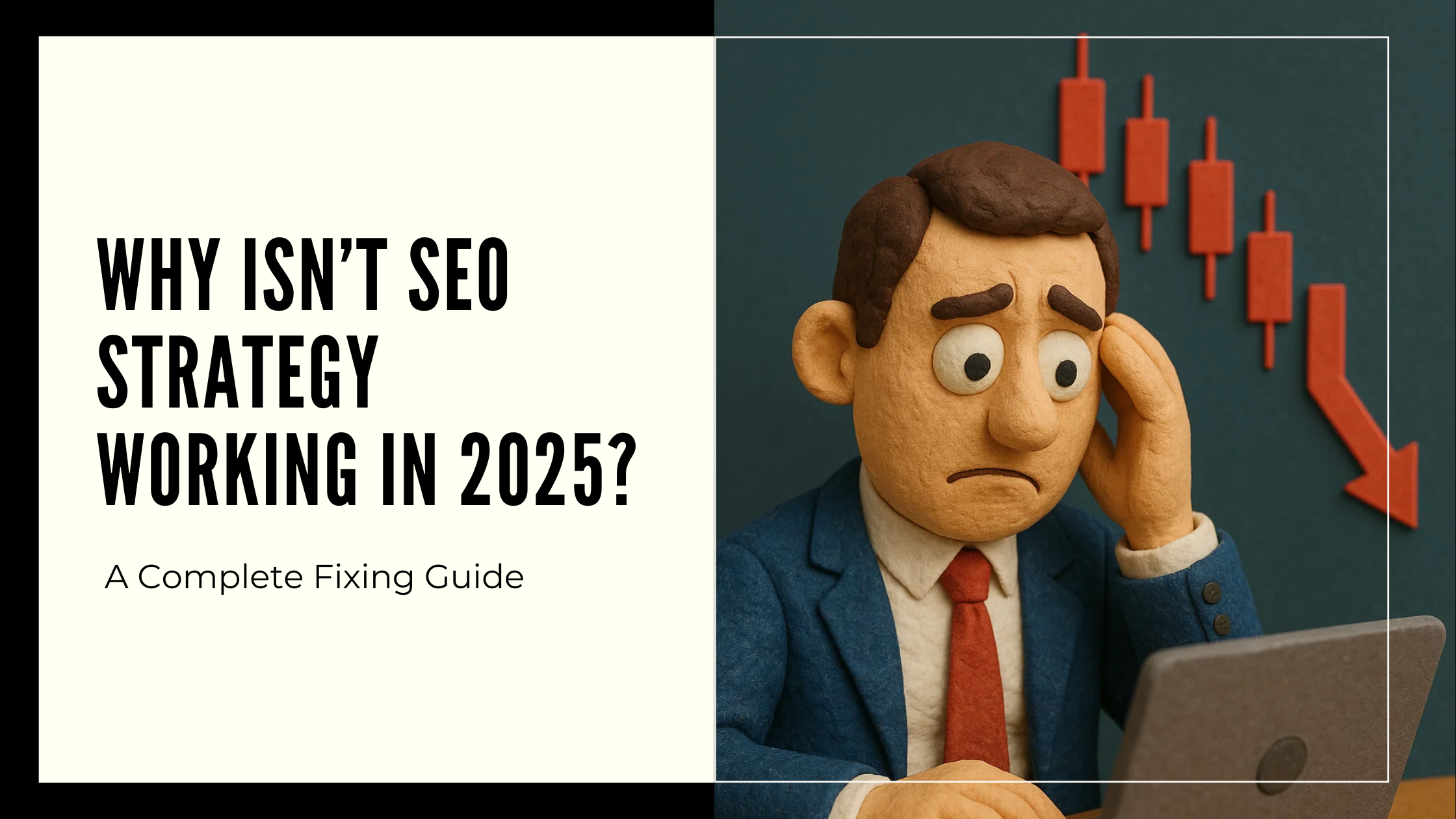
Your SEO Strategy might have worked last year, but in 2025, search engines have evolved. Google’s AI-powered updates, voice search, and user experience ranking factors mean what worked before may not work now.
If your website isn’t climbing the rankings, don’t panic. This guide will help you understand why your SEO strategy isn’t working—and how to fix it fast.
1. Your SEO Strategy Is Outdated
Search engine algorithms change constantly. If your SEO Strategy hasn’t evolved in the last 12 months, you’re already behind.
What’s Changed in 2025
- AI and machine learning dominate search rankings. Google’s Gemini updates now prioritize content relevance and engagement.
- Voice search continues to rise. People use conversational queries like “best pizza near me open now.”
- EEAT (Experience, Expertise, Authoritativeness, Trustworthiness) is more important than ever.
Fix:
Update your content regularly. Use natural, conversational keywords and add real expertise to your blog posts. If you haven’t already, optimize your site for voice search and mobile usability.
2. Poor Website Design Hurts Your Rankings
Even the best SEO Strategy can fail if your website performs poorly. Google now measures Core Web Vitals, including:
- Loading speed
- Mobile-friendliness
- Visual stability
Fix:
- Optimize your images and use caching plugins.
- Choose a fast, responsive website design. (If you need one, check our Website Design Services.)
- Test your site on Google PageSpeed Insights.
3. You’re Targeting the Wrong Keywords
Many businesses still chase short, high-competition keywords. In 2025, that’s a losing game. Your SEO Strategy should focus on long-tail keywords that match user intent.
Example:
Instead of “web design,” use “affordable web design services for startups.”
Fix: Utilize tools like Google Keyword Planner or Ahrefs to identify low-competition, high-intent keywords that are relevant to your target audience.
4. Your Content Isn’t User-Centric
If your blogs are stuffed with keywords but don’t solve user problems, you’re losing trust and traffic.
Google rewards content that provides value—not content written just for algorithms.
Fix:
- Write in simple English, answering real questions.
- Use visuals, infographics, and examples.
- Add clear CTAs like “Contact us” or “Get a Free Quote.”
- Focus on building trust online through helpful, experience-based content.
(Check out our blog on How to Build Trust Online.)
5. Ignoring Technical SEO
Behind-the-scenes issues often break a great SEO Strategy. These include broken links, missing meta tags, and poor site structure.
Fix:
- Use Google Search Console to find and fix crawl errors.
- Add XML sitemaps and proper internal links.
- Check for duplicate content using Copyscape or Siteliner.
- Ensure HTTPS and secure hosting.
For reliable hosting, explore our Website Hosting & Maintenance Services.
6. Weak Backlink Profile
Backlinks are still the backbone of SEO in 2025. But spammy or irrelevant links can hurt your SEO Strategy instead of helping it.
Fix:
- Focus on quality over quantity.
- Get links from relevant, high-authority sites in your industry.
- Write guest posts or share data-driven insights on platforms like Medium or LinkedIn.
- Avoid paid or low-quality backlink schemes.
7. You’re Not Using Local SEO
If your business serves a specific area, ignoring local SEO can cost you customers.
Fix:
- Set up and optimize your Google Business Profile.
- Add your location and phone number consistently across all platforms.
- Collect and display customer reviews.
8. You’re Not Tracking or Measuring SEO Results
A successful SEO Strategy requires continuous tracking. If you’re not measuring performance, you’re guessing.
Fix:
- Track organic traffic and keyword rankings using Google Analytics 4 (GA4).
- Monitor your top pages and bounce rates.
- Review monthly SEO reports and adjust your strategy based on real data.
Remember: SEO success isn’t instant—it’s a long-term process that needs consistent monitoring.
9. You’re Ignoring AI Tools and Automation
In 2025, ignoring AI in SEO means losing efficiency. From keyword research to content optimization, AI tools save time and improve accuracy.
Fix:
- Use AI-driven SEO tools like SurferSEO, Jasper, or Clearscope.
- Automate repetitive tasks like internal linking or meta descriptions.
- Combine human creativity with AI precision for the best results.
10. You Don’t Have a Clear SEO Roadmap
Without a clear plan, your efforts are scattered. Every business needs an SEO roadmap aligned with goals and timelines.
Fix:
Create an actionable SEO plan:
- Audit your website.
- Set measurable goals (e.g., 30% more organic traffic in 3 months).
- Execute step-by-step—on-page, off-page, technical SEO.
- Review and refine every month.
Conclusion: Fix Your SEO Strategy for 2025 Success
If your SEO Strategy isn’t working in 2025, it’s not the end—it’s a wake-up call. SEO isn’t just about keywords anymore; it’s about user experience, trust, and adaptability.
Start by fixing the basics: update your content, improve site performance, target the right audience, and use data-driven insights.
Need help improving your SEO results?
Let our experts at W3Layouts analyze your site and create a winning SEO plan tailored for your business.
Contact us today for a free consultation!

Your point of view caught my eye and was very interesting. Thanks. I have a question for you.